
Remodeling journal
Home Remodeling Process: Before You Start
See the home remodeling process before construction, from goals and scope to permits and a written estimate in Western Washington.
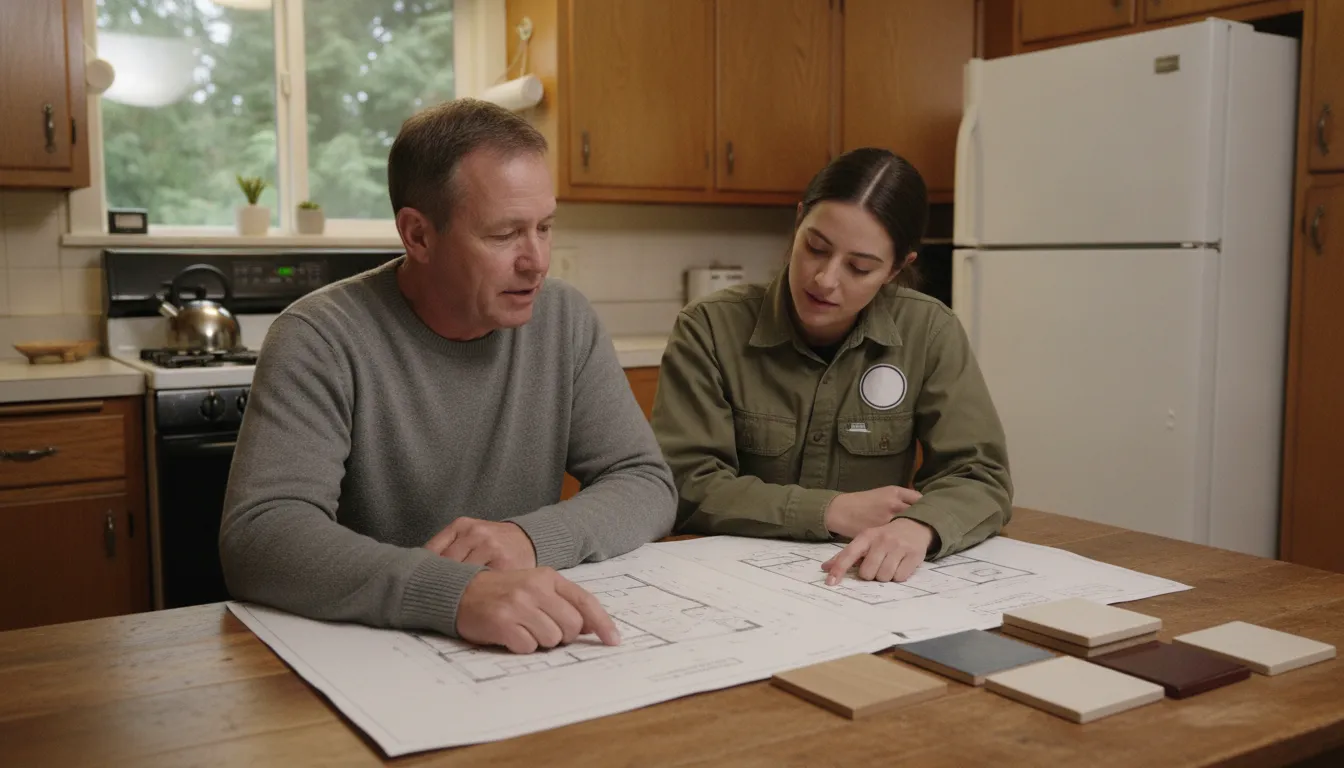
The home remodeling process starts long before anyone opens a wall. Homeowners in King and Pierce Counties get a smoother project when the outcome, the budget, and the scope are settled before a crew arrives. A clear sequence also makes the first estimate easier to compare, because each bidder is pricing the same job.
Talk through the next step with Tubro Construction at (253) 216-2633. You can also request a free estimate. That form asks for an estimate. It does not reserve an appointment.
A practical home remodeling process has seven homeowner steps before construction. Name the outcome, set a decision budget, and lock the scope. Then choose the design path, prepare selections, confirm permits with the local building department, and request one written estimate. Construction and the punch list come after those choices are in writing.
What the Home Remodeling Process Covers
A remodel changes a house that people already live in. That is different from building on an empty lot. The existing walls, plumbing, wiring, and floor heights all shape what is possible. The process is the order of decisions that turns a wish into a scope a contractor can price.
Searchers usually want the order of work, not a catalog of room ideas. The useful order is simple. Decide what must change. Decide what can wait. Put that scope in writing. Then ask for a price. Skipping ahead to tile samples or fixture shopping feels productive, but it often creates a budget that does not match the real work.
Tubro Construction is a veteran-owned remodeling and general contracting company serving homeowners in King and Pierce Counties in Western Washington. The work includes kitchen remodeling, bathroom remodeling, additions, painting, and custom homes. One assigned project manager stays with each project after design and selections are set.
This guide stays on the sequence. It does not replace a room-by-room design guide, a cost sheet, or a hiring checklist. Those questions have their own pages, and this article points to them instead of repeating them.
Seven Steps Before Construction Starts
Use this order when you are still deciding whether to remodel. Each step answers one question. If you cannot answer it, pause before you ask a contractor for a number.
- Name the outcome. Write one sentence about what daily life should be like when the work is done. More counter space, a safer shower, or a bedroom for a parent are clearer goals than "update the house."
- Separate needs from wants. Needs are the items that make the room work. Wants are the finishes you would like if the budget allows. Keeping the two lists apart protects the project when a price comes back higher than expected.
- Set a decision budget. Pick a number you can approve, not a guess you hope to beat. Share that range when you request an estimate so the scope can be shaped to it.
- Lock the scope. List the rooms, the walls that move, and the systems that stay. A kitchen that keeps the sink where it is costs a different project than a kitchen that moves plumbing.
- Choose the design path. Some homeowners arrive with drawings. Others want one company to design and build. Decide which path you want before the first meeting.
- Confirm permits early. Ask the building department in your city what your scope requires. Do this before you promise yourself a start date.
- Request one written estimate. Give every bidder the same scope, the same rooms, and the same allowance notes. A written price is the point where planning turns into a decision.
That sequence is the home remodeling process most homeowners actually control. Crews, inspections, and punch-list walks belong to the build, and they go better when these seven answers already exist.
Decisions That Shape Scope and Budget
Scope is the list of work. Budget is what you can approve. They have to match, or the estimate becomes a surprise. The cleanest way to keep them matched is to freeze three choices before anyone prices the job.
First, freeze the rooms. A single bathroom is a different project from a kitchen plus two baths. Second, freeze whether walls, windows, or plumbing move. Third, freeze the finish level in plain language, such as standard stock cabinets or a custom layout. You do not need brand names yet. You do need the level, because that level drives labor as much as materials.
Allowances are dollar placeholders for items you have not picked. They are useful, and they are also where budgets slip. If the allowance for a vanity is far below the vanity you later love, the difference is a change, not a mistake in the original price. Ask which items are allowances and which items are specified before you compare two estimates.
Western Washington houses add a few local checks. Older homes in King and Pierce Counties may hide tired wiring, uneven floors, or moisture stains once a wall opens. Those finds are not a reason to skip planning. They are a reason to keep a decision owner and a short list of what you will cut if something hidden appears. Tubro Construction uses upfront pricing with no hidden fees, and a written scope is what makes that promise checkable.
| Decision to freeze. | What to write down. | What happens if you skip it. |
|---|---|---|
| Rooms in the project. | Each room, and what is not included. | Bidders price different jobs. |
| Layout changes. | Walls, plumbing, or windows that move. | The price leaves out the expensive work. |
| Finish level. | Stock, semi-custom, or custom, in plain words. | Allowances do not match what you want. |
| Who designs. | You bring plans, or one firm designs and builds. | Meetings restart after the first price. |
| Start limits. | Rooms you must keep usable, and any hard dates. | The schedule ignores how you live in the house. |
If a line in that table is still blank, you are not ready for a final price. You are ready for a conversation that fills the blank. That is a better use of the first meeting than debating a number built on guesses.
Design, Selections, and the Build Path
Design is how the scope becomes drawings and a selection list. Some homeowners hire a designer first and then bid the drawings. Others want one design-build contractor to carry both the plan and the build. Neither path is automatically better. The right one is the one that matches how you like to decide.
On a design-build path, you review the layout with the same team that will price it. Changes show up as scope edits before construction, which is cheaper than changes after demolition. On a separate-design path, you own the handoff. The builder can only price what the drawings show, so gaps in the drawings become questions later.
Tubro Construction uses 20/20 design software so clients can see a kitchen or bathroom layout before work begins. That preview is a decision tool, not a guarantee of a finish date. It helps you confirm door swings, appliance space, and storage before materials are ordered.
Selections are the products that go into the room: cabinets, counters, tile, fixtures, and paint. Make them in groups, not one item a week. A vanity without a faucet, or a tile without a grout color, stalls the order. Tom Hite, Director of Bids and Proposals, tracks selections and pricing in detailed spreadsheets so the list and the price stay tied together.
Keep room-specific planning on the pages built for it. A kitchen design remodel has its own layout questions. A bathroom has its own wet-area questions. This process guide only asks you to finish selections before demolition, because open selections are the most common reason a clear plan turns fuzzy on site.
Permits, Estimates, and Who Runs the Job
Permit rules are local. Maple Valley, Auburn, Kent, Bellevue, Tacoma, and the other cities Tubro Construction serves do not share one checklist. A like-for-like fixture swap can be different from a wall removal. Ask the building department that covers your address what your scope needs, and ask before you set a start date. For Maple Valley specifics, read the Maple Valley remodel permit guide instead of guessing from a statewide rule.
Washington State Department of Labor and Industries tells homeowners to plan the project, get written bids, and verify registration before they hire. Its Hire Smart guide says a clear explanation of the work, plus a known budget, lowers the chance of problems. It also says to judge bids on scope, warranties, references, and dates, not on price alone.
That is the standard to use when you request an estimate. Send the same scope, the same rooms, and the same notes about allowances. Ask who pulls permits, who is your contact during construction, and how a change is priced. Hiring questions beyond that belong in the guide on how to hire a remodeling contractor.
During construction, one person should own communication. At Tubro Construction that person is the assigned project manager. The project manager is the client's primary contact after design and selections. Superintendents run the site. Other team members handle orders. If you want the detail on that split, the remodeling project manager guide covers it. This page only needs you to know the role exists before you sign.
A general contractor is the company that coordinates that work across trades. Use the general contracting page when you are ready to talk about a whole project, not when you still need the sequence above.
What This Guide Leaves to Other Pages
Several nearby questions sound like this one and are not. Mixing them makes both pages weaker, so here is the line.
How long the work takes is its own topic. Duration depends on whether you are remodeling one room or most of the house, and on inspections and hidden conditions. Read how long a home remodel takes for ranges. This guide will not guess weeks or months.
Cost is its own topic too. A kitchen in Pierce County and a bathroom in King County do not share one number, and a blog post should not invent one. Use the cost guides already on the site when you are pricing a specific room. An addition has its own planning page at home additions, because adding square footage is not the same sequence as remodeling space you already have.
Choosing a contractor, comparing a remodel with a new custom home, and checking a single city's permit rules each have a page. Link out when you reach that question. Stay here when the question is still "what do we decide, and in what order, before anyone builds?"
Service-area pages, including home remodeling in Maple Valley, describe where Tubro Construction works. They are not a substitute for this sequence. The sequence is the same in Covington, Renton, Bellevue, or Tacoma. Only the building department changes.
Frequently Asked Questions
What is the first step in a home remodeling process?
Write one sentence that says what daily life should be like when the work is done. Then list the rooms involved. Contractors can price a clear outcome. They cannot price a mood.
Should I set a budget before I request an estimate?
Yes. A decision budget tells the estimator which scope to price. You can still adjust after you see the number. Starting with no range usually produces a design you will not approve.
Do I need a permit before I ask for an estimate?
You do not need an issued permit to request an estimate. You do need to know whether your city will require one for the scope you want. Ask the local building department, and include that answer in the notes you send with the estimate request.
Who should I call with questions once work starts?
Call the project manager named for your job. At Tubro Construction, that person is your primary contact after design and selections. Site questions about crews still go through that contact so answers stay in one place.
Does requesting an estimate book a start date?
No. The estimate request asks Tubro Construction to review your project and follow up. It does not reserve a construction date or an appointment slot. Active-duty military members and first responders can ask about the 5 percent discount when you talk with the team. The offer is limited to those two groups.
When your scope, budget, and room list are written down, call Tubro Construction at (253) 216-2633 or request a free estimate. You will reach a person who can price the project you described. The form does not book an appointment.
Bring your ideas. We’ll talk through the next step.
Tell us about your home, your project city, and what you would like to change.
Request a Free Estimate