
Remodeling journal
Outdoor Living Contractors: How to Choose One
Compare outdoor living contractors on scope, coordination, and written estimates before you request a free estimate in King or Pierce County.
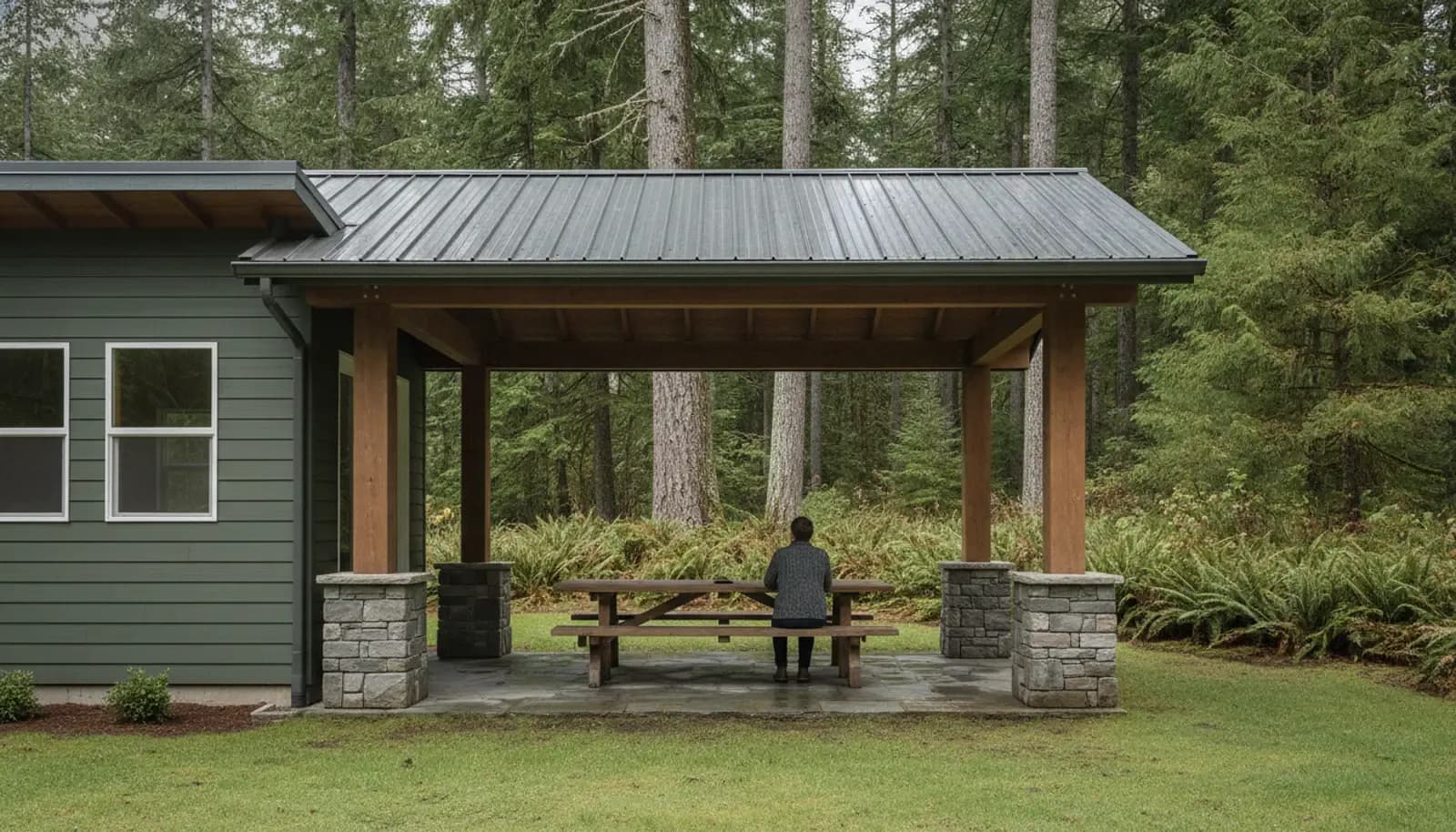
Choosing among outdoor living contractors is easier when you know what the project includes and who will coordinate it. A covered seating area, a new patio, lighting, or a connection to the house can look like one idea and still involve structure, drainage, and finishes. In King and Pierce Counties, rain and access often change the work as much as the layout does. You do not need a finished design before you talk with a contractor. You do need a clear description of how you want to use the space.
What should outdoor living contractors be responsible for?
Start by writing the outcome, not a product list. Do you want a dry place to sit, a path between the house and the yard, evening use, or a larger outdoor room that ties into an existing deck or patio? Outdoor living contractors should be able to turn that outcome into a scope: what is built, what is left alone, and which trades have to work together.
Tubro Construction treats deck and covered outdoor living as part of residential general contracting, alongside remodels and additions. That matters when the outdoor work touches the house. A new cover can affect structure, flashing, and how water leaves the roof and the yard. A paving change can change grade next to a door. Ask whether one team will manage those connections or whether you will hire each piece separately.
Responsibility also includes the unglamorous edges of the job. Who protects nearby plants and siding? Who confirms the cover can tie into the existing structure? Who tells you if a gate, a slope, or a tight side yard will change how materials get in? Outdoor living contractors who answer those questions early are easier to compare than a contractor who only names a finished look.
Write the answers in your own words before you collect prices. A sentence such as "covered seating for six, next to the existing patio, with a clear path to the kitchen door" is more useful than a mood board. It gives every contractor the same target. If a company wants to change that target, you can see the change instead of discovering it inside a total.
Keep neighboring topics in their own places. A Western Washington outdoor living design guide covers layout, cover choices, and weather. A patio contractor guide covers surfaces and the ground under them. This article is about choosing the contractor who can carry the outdoor living scope.
How do you compare outdoor living contractors before you call?
Look for evidence that the company builds the kind of outdoor work you want, in the counties where you live. Review project photos for covers, decks, and outdoor rooms, not only indoor remodels. Then read how the company describes responsibility. A useful contractor page explains who manages the job, how pricing is presented, and where the team works.
Tubro Construction is a veteran-owned residential remodeling and general contracting company serving homeowners in King and Pierce Counties. Rich Tietjen, the owner, is a U.S. Army veteran. The company offers free estimates, talks through pricing up front, and assigns a project manager to each project. Those are the facts to confirm in your own conversation, not a promise about schedule or price.
- Match the portfolio to your project type: cover, deck, patio connection, or a broader outdoor room.
- Confirm the company works in your city in King County or Pierce County.
- Note who you would talk with after the estimate, and whether a project manager stays on the job.
- See whether outdoor work is offered with the rest of the house, or only as a standalone surface.
You can review recent project examples and the team page before you decide who to call. Service cities are listed on the service area pages.
A website can only take you so far. Use it to decide who is worth a conversation, not to rank a winner. Look for outdoor projects that resemble your lot: a cover near the house, a deck that meets a door, or a seating area that has to live with Western Washington rain. If the photos are only kitchens and baths, ask whether outdoor living is a regular part of the work.
Also notice how the company talks about money and access. Clear, upfront pricing means you should be able to see what the estimate includes before you commit. It does not mean every home gets the same price. Access, structure, and weather exposure still change the work. A contractor who says those items need a site visit is being specific. A contractor who prices the whole idea from a text message is leaving the hard parts for later.
Which scope questions separate outdoor living contractors?
Two proposals can share a title and still describe different jobs. Ask each contractor to say what is included, what is excluded, and what still depends on a site visit. The point is not to catch a low number. The point is to see whether the scope matches the way you will use the space.
| Question to ask | What a useful answer covers | Why it changes the choice |
|---|---|---|
| What is the outdoor living scope? | Cover, deck, paving, railings, lighting, or a connection to the house, named as included or excluded | Stops you from comparing a cover project with a surface-only project |
| Who coordinates the work? | One project lead, or separate contractors you would hire yourself | Shows who answers questions once construction starts |
| What does the site need first? | Access, slope, existing paving, and where rainwater goes | Surfaces conditions that can change scope before a price is meaningful |
| How are selections handled? | What is specified now, and what is an allowance until you choose | Keeps unfinished product choices from hiding inside one total |
| How are changes reviewed? | What gets written down before added or removed work proceeds. | Later decisions stay visible instead of informal. |
If the outdoor work is really a house addition with an outdoor component, read Tubro's home additions page and keep that scope separate. If you are still shaping the space itself, use the design guide rather than asking a contractor interview to do that job.
Listen for how the contractor handles pieces that often get blurred together. A deck board, a patio surface, and a roof over a seating area are different kinds of work. One company may build all three. Another may only build one and assume you will hire the rest. Neither answer is automatically wrong. The problem is a proposal that uses "outdoor living" as a label and never says which pieces are in it.
Ask what has to be decided before construction can be sequenced. A cover that connects to the house may need structural review before footings or posts are set. A new surface may need to meet an existing slab or stair. If the contractor cannot say which decision comes first, you do not yet have a scope you can compare. You have a concept.
How should you check registration and references?
Washington asks homeowners to hire a registered construction contractor and to verify the registration themselves. The Washington State Department of Labor & Industries explains how to check a contractor's registration, bond, and insurance before you hire, and it recommends comparing written bids. Registration does not guarantee a problem-free project. It is still a basic check, and it is your check to make, not a line to take from a brochure.
Ask for recent outdoor projects you can compare with yours: a cover, a deck connection, or a multi-part outdoor room, not only an indoor remodel. When you call a reference, ask whether one person stayed responsible for questions, whether the written scope matched the built work, and how rain or access was handled. Those answers tell you more than a star rating.
Local permits are a separate question. A city or county may review structural work, a new cover, or changes that affect the house even when a contractor is registered with the state. Ask who confirms which reviews apply to your property. Do not treat outdoor work as automatically exempt.
References are most useful when the project is recent and similar. Ask what the reference owner's original request was, what changed after the site visit, and whether the written scope was updated before that change was built. A happy result on a simple repair does not tell you how the company handles a cover, a slope, or a connection to the house.
Keep the registration check and the reference check separate from design taste. You can like a photo and still need to verify the license. You can verify the license and still decide the company's outdoor work is not the kind you want. Outdoor living contractors should be willing to point you to the state lookup and to a project you can ask about.
How do you compare estimates from outdoor living contractors?
Put every proposal next to the same feature list. Mark each item included, excluded, or still undecided. Then compare assumptions: access, protection of landscaping, cleanup, and what happens if the ground or the existing structure is not what the first look suggested.
A lower total can mean a smaller project. If one estimate includes a cover and another prices only the walking surface, the numbers are not the same job. Ask how allowances work if you have not chosen materials. Ask what would trigger a revision, and whether that revision is reviewed before the work changes.
Tubro Construction provides free estimates and assigns a project manager so the scope conversation has a named owner. Use the residential general contractor page if you want one team for outdoor living that also touches remodeling or the house. For a broader hiring checklist that is not specific to outdoor scope, see how to hire a remodeling contractor in Western Washington.
Read the exclusions with the same care as the total. Common gaps are electrical for lighting, flashing where a cover meets the house, repairs to existing rot, and restoration of landscaping. If those items are missing from every estimate, you can ask each contractor to add the same assumption. If only one estimate includes them, do not treat the cheaper number as the same project.
Ask how communication works after you approve a scope. Who is the project manager? How will you hear about a condition that was not visible at the first visit? A named contact does not remove surprises, but it tells you where questions go. That is part of comparing outdoor living contractors, not a detail to settle after you have already chosen on price alone.
What should you bring to the first estimate?
Bring enough for a useful site conversation, not a finished plan. Photos of the yard, a rough size, and a note about doors, steps, gates, and slopes are enough to start. Say which uses are essential and which can wait. If you have inspiration photos, point to the detail you care about, such as a dry seating area or a clear path to the kitchen door.
- Write the main uses: sitting, dining, grilling nearby, or a route between house and yard.
- List what must be in the first project and what is optional.
- Note access limits, slopes, and anything you want protected.
- Bring questions about who coordinates the work and how changes are written down.
- Ask which decisions need a site visit before a scope can be compared fairly.
Tubro's guide to preparing for a remodel estimate is a useful companion if the outdoor project is part of a larger home update. You can also see where the team works on the King and Pierce County service areas.
Say what you do not want, too. If you are not ready to rebuild a deck, or you only want a cover over an existing patio, put that in the note. Contractors can only exclude work they know is out of bounds. A short limit keeps the first visit focused and keeps the estimate from growing into a whole-yard plan you did not ask for.
Bring one question about Western Washington weather: where will rain from a new cover go, and who confirms it does not drain toward the house? You are not asking for an engineering study in the first email. You are checking whether the contractor treats water as part of the outdoor living scope. A careful answer belongs in the written estimate, not only in the conversation.
Frequently asked questions about outdoor living contractors
Do I need a finished design before I contact outdoor living contractors?
No. A short description of how you want to use the space is enough to start. Photos and rough measurements help. Final sizes and structural details should wait until someone has looked at the site.
Is an outdoor living contractor the same as a patio contractor?
Not always. A patio scope is often the surface and the ground under it. Outdoor living work can also include a cover, a deck connection, lighting, and how the space meets the house. Ask which of those pieces are in the proposal.
Should I hire one company or several trades?
Either can be legitimate. One company is easier to compare when the cover, the surface, and the house connection have to work together. If you hire trades separately, you still need a written list of who owns each piece.
What if my city is outside King or Pierce County?
Tubro Construction serves homeowners in King and Pierce Counties. If your project is elsewhere in Western Washington, confirm the service area before you request an estimate.
Choose a contractor who can own the outdoor scope
The right outdoor living contractor can describe the scope and name who coordinates it. They can also give you a written estimate you can compare. Check registration yourself, match the portfolio to the work you want, and keep design choices in the design conversation. When you are ready, request a free estimate and bring the uses, limits, and questions above.
Bring your ideas. We’ll talk through the next step.
Tell us about your home, your project city, and what you would like to change.
Book Your Free Estimate