
Painting & exteriors
Planning an Exterior Painting Weather Window in Western Washington
Understand how product instructions, surface conditions, rain, dew, and overnight temperatures shape an exterior painting schedule in Western Washington.
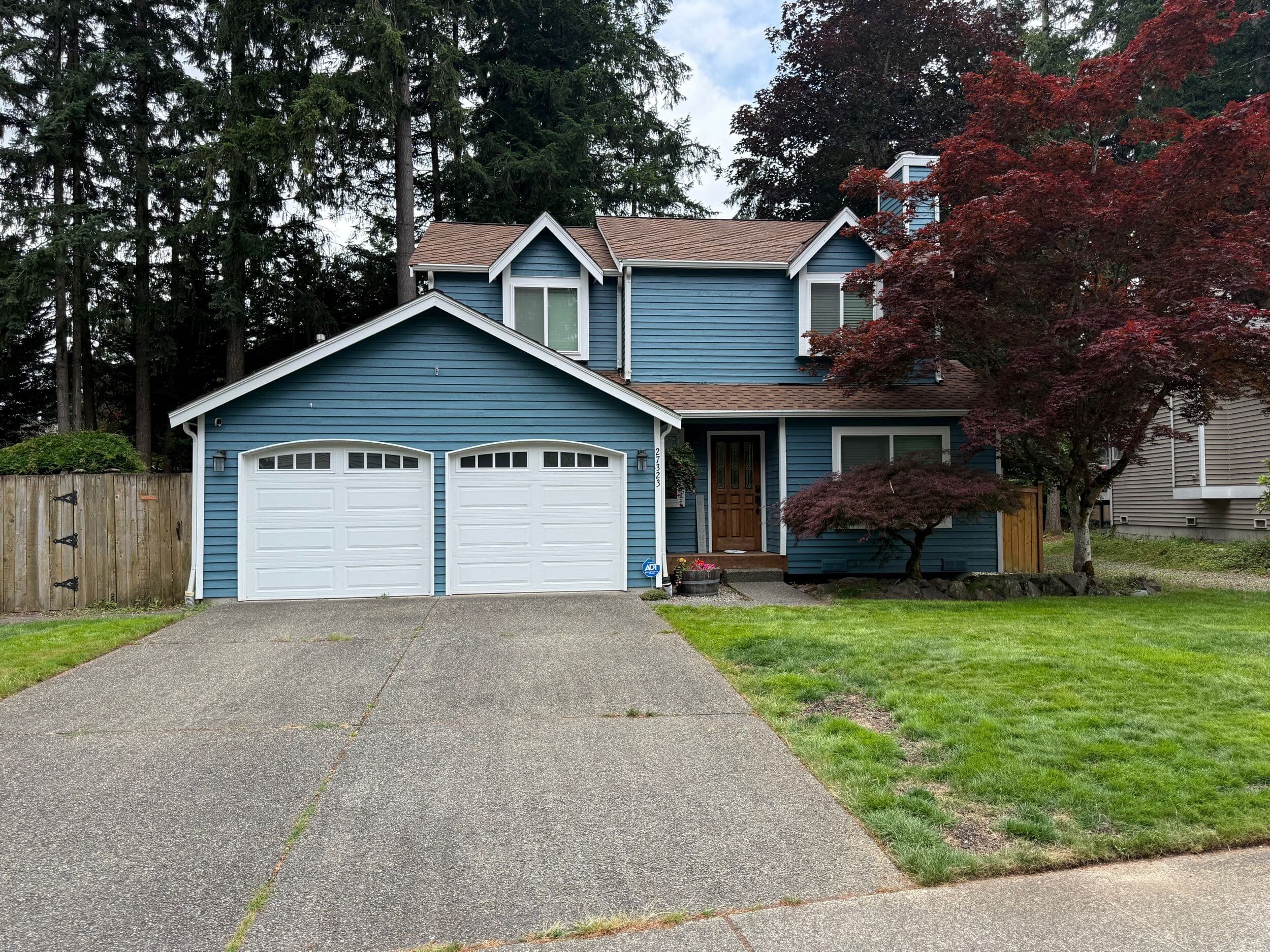
Choose a workable window, not a guaranteed month
When should you paint a house in Western Washington? A calendar month is a starting point for scheduling, but it cannot confirm that a particular wall is ready for coating. The useful question is whether the surface and expected conditions meet the selected product's instructions throughout application and the required drying period.
For homeowners planning a repaint in King or Pierce County, this changes how to discuss timing. Ask for a target period, a readiness check, and a plan for weather changes. This article is a planning guide rather than a forecast. Your contractor should review actual conditions near the work date, using the requirements for the paint and primer specified for your house.
Start with the exact coating system
Benjamin Moore directs homeowners to each product's technical data sheet for suitable painting temperatures. That is more useful than a universal temperature rule. Different products have different application requirements, and the primer deserves the same attention as the finish coat. Ask for the product names before discussing whether an early or late season opening is suitable.
Request a straightforward explanation of the conditions the crew will check and what would cause postponement. Keep the conversation specific: which surfaces are being painted, which coating goes on them, and which instructions govern that work? Avoid interpreting a low-temperature marketing claim as permission to paint under every other condition that might occur that day.
Look beyond the afternoon high
A pleasant afternoon does not describe the whole painting window. Sherwin-Williams' exterior application guidance highlights the problem of nighttime cooling and dew after a warmer day. Ask the contractor how overnight conditions and the available drying period affect when painting starts and stops, rather than assuming the crew can work until sunset whenever the afternoon feels comfortable.
This is also a useful way to discuss a short weather opening. A forecast showing a break between wet periods should lead to a product-specific review, not an automatic commitment. Ask whether the proposed sequence leaves the necessary time for each operation. A clear explanation of the stopping point is more helpful than a general promise to work quickly.
Treat readiness as a condition of each surface
The sheltered porch and an exposed wall do not necessarily present the same conditions. Benjamin Moore's exterior painting guidance calls for suitable surface preparation and attention to dryness before painting. Ask how the crew will confirm that cleaned or previously wet surfaces are ready for the chosen system. The absence of visible rain is not itself that confirmation.
Point out areas you have seen remain wet, irrigation that reaches siding, or recurring drips near trim. You are supplying observations, not diagnosing the building. Ask the contractor to decide what needs investigation and whether any repair belongs before painting. Record these locations on your initial photographs so they remain part of the discussion if the estimate and work occur weeks apart.
Use flexible scheduling without vague communication
Agree on how the contractor will communicate a weather decision and when you should expect the next update. If the start moves, clarify whether deliveries, access arrangements, or household preparation move with it. This reduces the inconvenience of leaving outdoor furniture stacked or vehicles displaced when application cannot yet begin.
Discuss which tasks can proceed independently and which depend on the coating window. Do not assume that surface preparation and finish application must happen on consecutive days, or that they can always be separated without another check. Ask the project team to explain its sequence. Your role is to make access and decisions available while the contractor confirms the technical conditions.
Keep an event date separate from a coating deadline
Tell the contractor about gatherings, travel, or landscaping work before accepting a schedule. If a graduation party or house listing creates a firm date, ask what happens if suitable conditions do not arrive. Decide whether temporary changes to access or photography plans would be acceptable. A household deadline should be visible early enough to discuss realistic options.
At the estimate, bring your timing constraints, known wet areas, and a list of the surfaces you want painted. Ask Tubro Construction to explain the proposed products, preparation sequence, and weather communication plan. The most useful schedule gives you a clear expectation while preserving the checks that the coating system requires; it does not rely on a particular month doing all the work.
Sources & further reading
Consult the relevant authority for requirements specific to your property and project.
- Benjamin Moore: Temperature guide for exterior painting
- Sherwin-Williams: Exterior product application questions
- Benjamin Moore: Painting a home exterior
Bring your ideas. We’ll talk through the next step.
Tell us about your home, your project city, and what you would like to change.
Request a Free Estimate