
Remodeling journal
Deck Cost King County, WA: Composite vs. Lumber
Learn what shapes deck cost in King County, WA, compare composite and lumber, plan for rain and drainage, and prepare for a Tubro Construction free estimate.
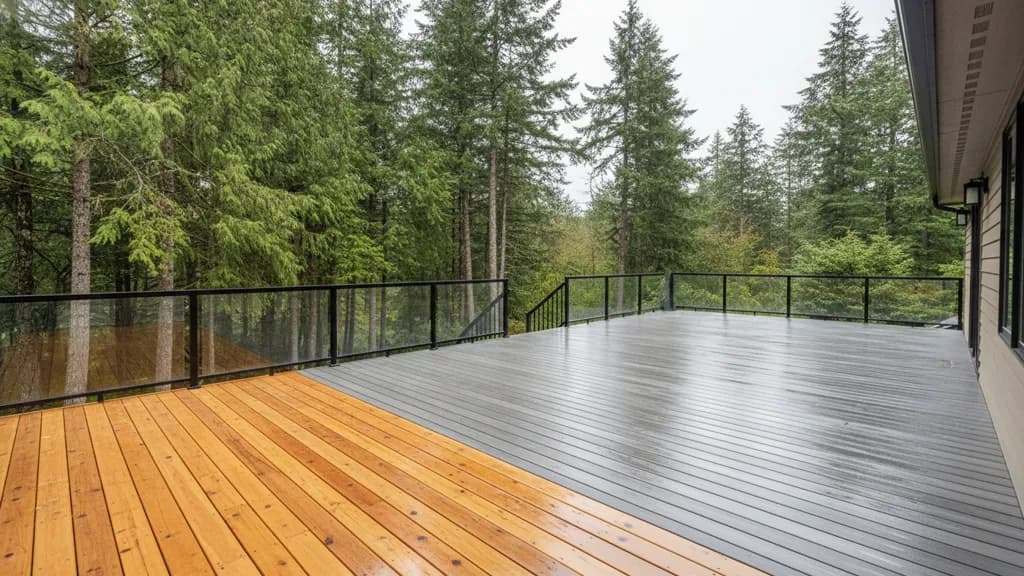
If you are researching deck cost in King County, WA, the most useful answer is not a generic square-foot number. A reliable budget depends on the deck's size, elevation, stairs, structure, material, drainage plan, site access, and permit path. This guide explains how composite and lumber choices affect scope so you can compare estimates with fewer surprises.
Schedule a free estimate with Tubro Construction to discuss your deck, site conditions, material preferences, and project goals.
How Much Does a Deck Cost in Western Washington?
Deck projects in Western Washington do not share one dependable price because two decks with the same footprint can require very different work. A ground-level platform with simple stairs is a different project from an elevated deck attached to a home on a slope. Material selections, footings, railings, demolition, drainage, permitting, and access all shape the final estimate.
Tubro Construction does not publish a fixed deck price because the estimate needs to reflect the home and the proposed scope. Instead of treating an online average as a bid, ask for a written estimate that explains what is included, what is assumed, and what conditions could change the plan. That approach is especially important in King County, where properties range from level suburban lots to wooded or sloped sites.
For homeowners, the first budget question should be, "What kind of deck are we planning?" Clarify these basics before comparing totals:
- Approximate length, width, and finished height
- Whether the deck will attach to the house or stand independently
- Number and configuration of stairs
- Railing style and guard requirements
- Composite decking, lumber decking, or a side-by-side material review
- Whether the area below an elevated deck should stay open, become drier, or support future use
- Whether an existing deck must be removed and hauled away
These choices turn a broad cost question into a project scope an estimator can evaluate. They also make it easier to identify which changes are essential for safety and durability and which are optional design upgrades.
Composite Decking vs. Lumber: Which Is More Cost-Effective?
Composite decking and lumber can both be good choices for a Western Washington home. Composite is often considered when the homeowner wants a consistent appearance and less routine staining or refinishing. Lumber is often chosen for its natural grain, traditional appearance, and flexibility in design. The better value depends on the initial scope, expected maintenance, exposure, and how long you plan to use the home.
| Decision factor | Composite decking | Lumber decking |
|---|---|---|
| Upfront budget | Material selection and manufacturer system affect the estimate; installation details still matter. | Species, grade, treatment, board layout, and finishing requirements affect the estimate. |
| Appearance | Consistent color and profile options can support a clean, coordinated design. | Natural grain gives the deck a traditional wood appearance that changes over time. |
| Maintenance planning | Often selected to reduce routine refinishing, but it still needs cleaning and proper installation. | Needs a maintenance plan suited to the wood, finish, shade, moisture, and exposure. |
| Wet-weather planning | Still requires sound framing, ventilation, fastening, slope, and water management. | Needs careful detailing, adequate drying, appropriate finishing, and regular inspection. |
| Design flexibility | Works well for borders, contrasting colors, and integrated outdoor features. | Works well for a warm natural look and custom layouts that complement the home. |
The board material is only one part of the assembly. Ask how the proposed deck will handle framing, joists, posts, footings, fasteners, stairs, guards, railings, flashing, and the connection to the home. A lower material cost does not make a lower total cost if the design needs more preparation, maintenance, or structural work.
In a shaded or damp area, maintenance expectations deserve as much attention as the sample color. In a sunny, open area, appearance and heat exposure may lead to a different conversation. Tubro Construction can compare composite and lumber options as part of a site-specific deck estimate rather than treating either material as the automatic answer.
A useful long-term comparison also considers the home's ownership horizon. A homeowner who expects to stay for many years may weigh routine maintenance differently from someone preparing a property for sale. Neither choice is automatically right. The point is to compare the material's care requirements, appearance over time, repair expectations, and compatibility with the planned structure before the estimate is finalized.
Want to review the full outdoor-living scope, not just decking boards? See Tubro Construction's outdoor living and general contracting services before you finalize a material list.
What Drives Deck Cost in King County?
The largest cost differences usually come from the work beneath and around the deck, not from the visible surface alone. A useful estimate separates the deck's structural, finish, site, and coordination requirements so you can see which decisions are driving the budget.
| Cost driver | What to clarify in the estimate |
|---|---|
| Size and height | Footprint, elevation, post layout, stairs, landings, and guard requirements. |
| Site and access | Grade, trees, retaining conditions, tight access, staging space, and protection of the home. |
| House connection | Ledger, flashing, siding interface, door threshold, drainage, and structural attachment details. |
| Materials and finishes | Decking, framing, railing, stairs, trim, fasteners, lighting, and any built-in features. |
| Demolition and disposal | Removal of an existing deck, hauling, disposal, and repair of surfaces revealed during removal. |
| Water management | Surface drainage, under-deck drainage, gutters, discharge points, and protection near the foundation. |
| Permitting and coordination | Jurisdiction, drawings, permit responsibilities, inspections, and any engineering or site review. |
King County is not one permitting jurisdiction. A property inside a city may follow city requirements, while an unincorporated property may follow county requirements. Height, roof coverage, structural attachment, setbacks, critical areas, slopes, and other site conditions can affect the permit path. The King County single-family permit resources are a useful starting point, but homeowners should confirm the rules for the exact property.
Share the address, photos, rough dimensions, and any known easements, wetlands, septic systems, steep slopes, or drainage problems during the estimate. Early site context helps a contractor distinguish a straightforward deck from a project that needs more design, permitting, or coordination.
What Does an Under-Deck Drainage System Cost?
An under-deck drainage system is not a standalone universal add-on with one standard price. Its scope depends on the deck framing, height, joist layout, available discharge path, siding and ledger details, stairs, gutters, and how the space below will be used. A system designed to keep a walkway dry has different requirements from one supporting a finished outdoor room.
During an estimate, ask these questions:
- Will the drainage system sit above the joists or below the framing?
- Where will collected water discharge during a heavy rain?
- How will the system connect to flashing, siding, gutters, stairs, and perimeter trim?
- Will the space below remain ventilated and accessible for inspection?
- Does the design include lighting, screening, a ceiling finish, or future electrical work?
- How will roof runoff and existing surface runoff interact with deck runoff?
Tubro Construction lists under-deck drainage among its outdoor living services because wet-weather planning matters in Western Washington. The goal is not merely to add a ceiling below a deck. The water path, framing, home connection, foundation, landscaping, and future use should be considered together. Planning drainage at the start is usually clearer than trying to fit it into a completed structure.
How Should You Compare Deck Estimates?
Compare estimates by scope, not by the bottom line alone. A proposal that appears lower may exclude demolition, railings, stairs, permits, drainage, finish work, or site protection. A proposal that appears higher may include more complete preparation and coordination. The right comparison is between proposals that describe the same finished result.
- Confirm the dimensions. Check the footprint, height, stair count, landings, and railing locations.
- Read the material assumptions. Identify the decking, framing, railing, trim, fasteners, and finish products included.
- Review the house connection. Ask how ledger, flashing, siding, doors, and water management are addressed.
- Check site work. Confirm demolition, disposal, grading, access, tree protection, and surface repairs.
- Clarify permits. Ask who prepares applications, coordinates inspections, and communicates jurisdiction requirements.
- Discuss changes. Understand how selections, concealed conditions, and owner-requested changes are documented and priced.
- Ask about communication. Confirm who answers questions and how the project team will share updates.
Tubro Construction emphasizes upfront pricing with no hidden fees, free estimates, personalized service, and an assigned project manager for each project. Those details matter on a deck because material selection, weather, site access, drainage, and permitting can affect several parts of the plan at once. A clear process gives you a better way to evaluate trade-offs before construction begins.
Contact Tubro Construction for a free deck estimate and bring your measurements, photos, material questions, and plans for the space below the deck.
Frequently Asked Questions About Deck Cost in King County
What is the biggest factor in deck cost?
Size matters, but elevation, stairs, site access, structural attachment, railings, drainage, permitting, and existing conditions can change a project just as much. Ask for an estimate that separates these components so you can see which decisions have the greatest effect.
Is composite decking cheaper than lumber?
There is no universal answer. Composite and lumber have different material, installation, and maintenance considerations. Compare the complete deck assembly and the expected maintenance plan, not only the price of individual boards.
Does a deck in King County need a permit?
Permit requirements depend on the property's city or county jurisdiction, deck height, attachment, roof or cover, setbacks, critical areas, and other project details. Confirm the requirements for the exact address before construction begins. A contractor can help organize the permit discussion, but local authorities determine the applicable path.
Is under-deck drainage worth considering in Western Washington?
It is worth discussing when an elevated deck covers a walkway, patio, storage area, or planned outdoor room. The system should direct water away from the home and be designed with access, ventilation, framing, stairs, and the discharge point in mind.
What should I bring to a deck estimate?
Bring the property address, rough dimensions, photos of the home and proposed deck area, inspiration images, material preferences, and a list of must-have features. Mention slopes, drainage, existing structures, access limits, future plans, and the way you expect to use the finished space.
Where does Tubro Construction build decks?
Tubro Construction serves homeowners in King and Pierce Counties, including communities such as Maple Valley, Ravensdale, Black Diamond, Auburn, Renton, Bellevue, Tacoma, Bonney Lake, and nearby Western Washington areas. Confirm service availability for your property when you request an estimate.
Planning a composite or lumber deck is easier when the budget reflects the whole project: structure, site, water management, materials, permitting, and communication. Learn more about Tubro Construction's team and project approach, then request a free estimate for a plan built around your King County home.
Bring your ideas. We’ll talk through the next step.
Tell us about your home, your project city, and what you would like to change.
Book Your Free Estimate